

Kids These Days…
The New Psychology of the Young Hustle.


In this week's Pulse Check, friend of Dot Dot Dot and BOX EYE founder James Davis argues that the most important business minds of the next decade won’t be found in boardrooms or business schools. They're in middle school.
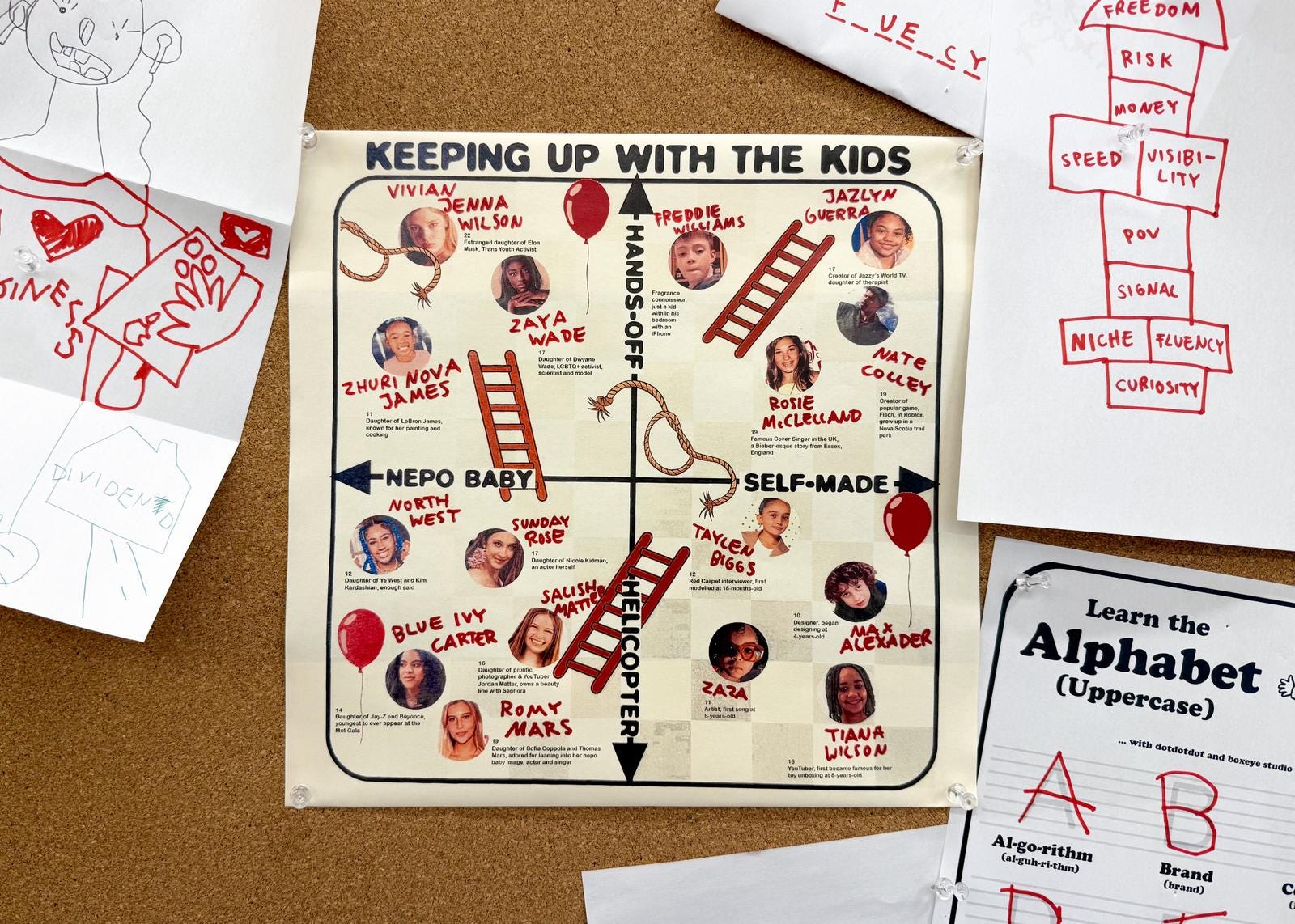
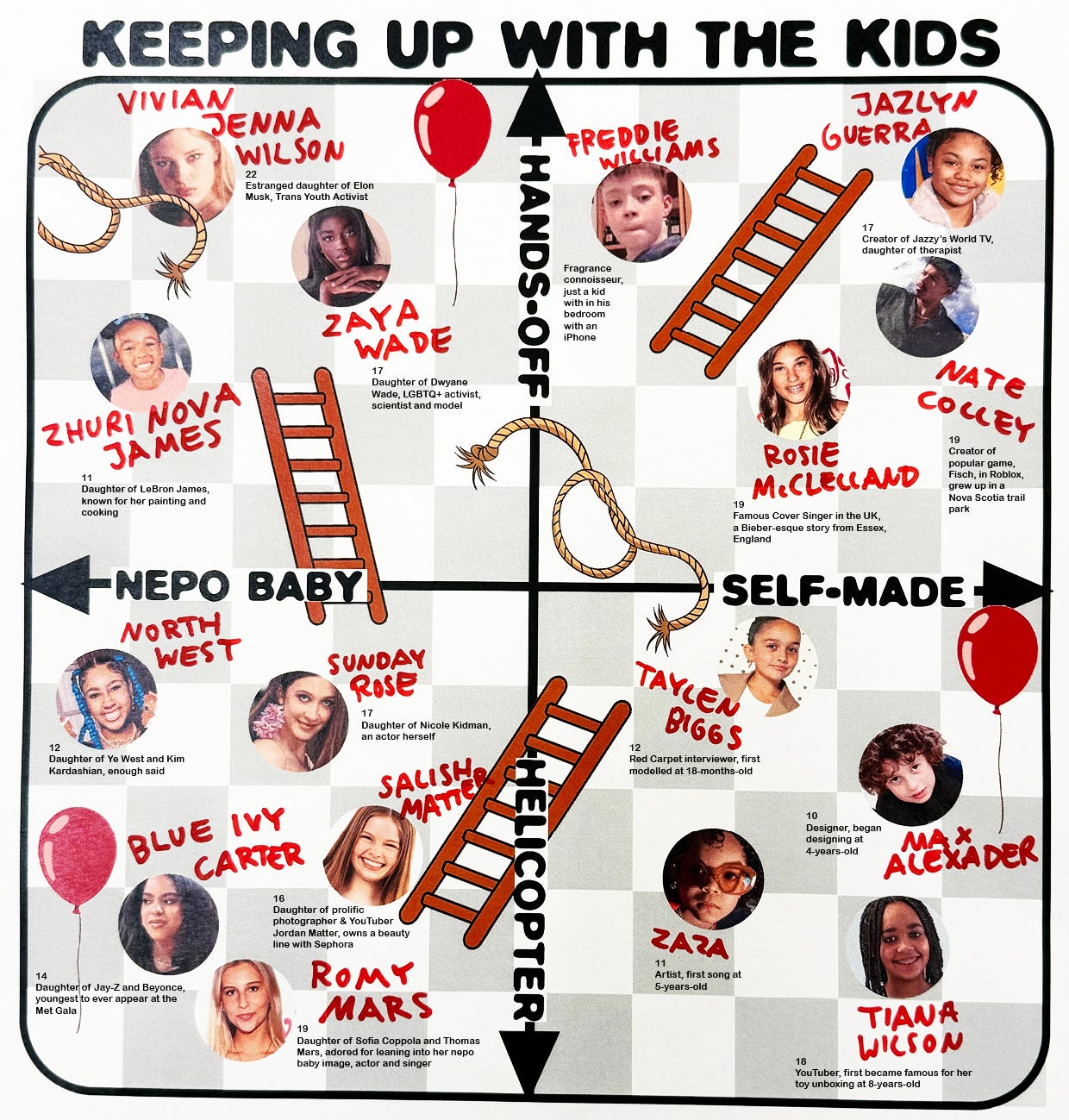
North West was only six-years-old when she performed her first track during her father Ye’s YZY Season 8 at Paris Fashion Week. It was a remix of “What I Do?” by ZaZa, a rapper who was five at the time. West is now twelve. In the years between she’s featured on her father’s records, toured stadiums with him—most recently the Bully stadium tour—collaborated with FKA Twigs on “Childlike Things” and, controversially, with Sean Combs. She’s also voiced a character in Paw Patrol: The Movie, appeared regularly on Keeping Up With The Kardashians, and been shot for i-D and Interview Magazine.
Earlier this month, she dropped her debut EP—NOrth4evr, originally conceived as Elementary School Dropout, a nod to her father’s College Dropout—and she’ll make her festival debut at The Summer Smash in Chicago this year. She’s also reportedly weeks away from launching her own fashion brand, NOR11. West hasn’t even graduated elementary school.
West isn’t the only (pre-)teen taking over your feeds.
Max Alexander is ten years old and has already realised what he calls a “lifelong” dream by showcasing at Paris Fashion Week. Salish Matter, 15, created an exclusive line for Sephora called Sincerely Yours. Nate Colley, 19, is reportedly pulling $400,000 (USD) a month from Fisch, a Roblox game he built himself.
When did the hustle get so young? How? Why?
On the surface, this looks like a familiar story: precocious kids, ambitious parents, platform fame and the usual chorus of alarm bells. And yes, the nepo-adjacent machinery is hard to ignore—North West and Salish Matter are both offspring of entrepreneurial moguls, and the infrastructure of opportunity that surrounds them isn’t available to most children. But the instinct to reach for precedent is also a way of avoiding the question. We’ve been here before, haven’t we? The Jackson Five. Drew Barrymore. Justin Bieber. The Disney conveyer belt of ultra-talented “triple-threat” kids.The green slimed school of Nickelodeon.
Except we haven’t. Not quite.
Those were industries choosing children. What’s happening now is children choosing industries, and building their own. The distinction matters.
Children have always worked, performed, sold, and entertained for generations (and the darker version of that story is well documented in the Born To Be Viral: The Real Lives of Kidfluencers documentary, streaming somewhat ironically on Disney+). What’s happening here is different. These are teenagers building legitimate commercial ventures, largely on their own terms, inside a creator economy that simply didn’t exist a decade ago.
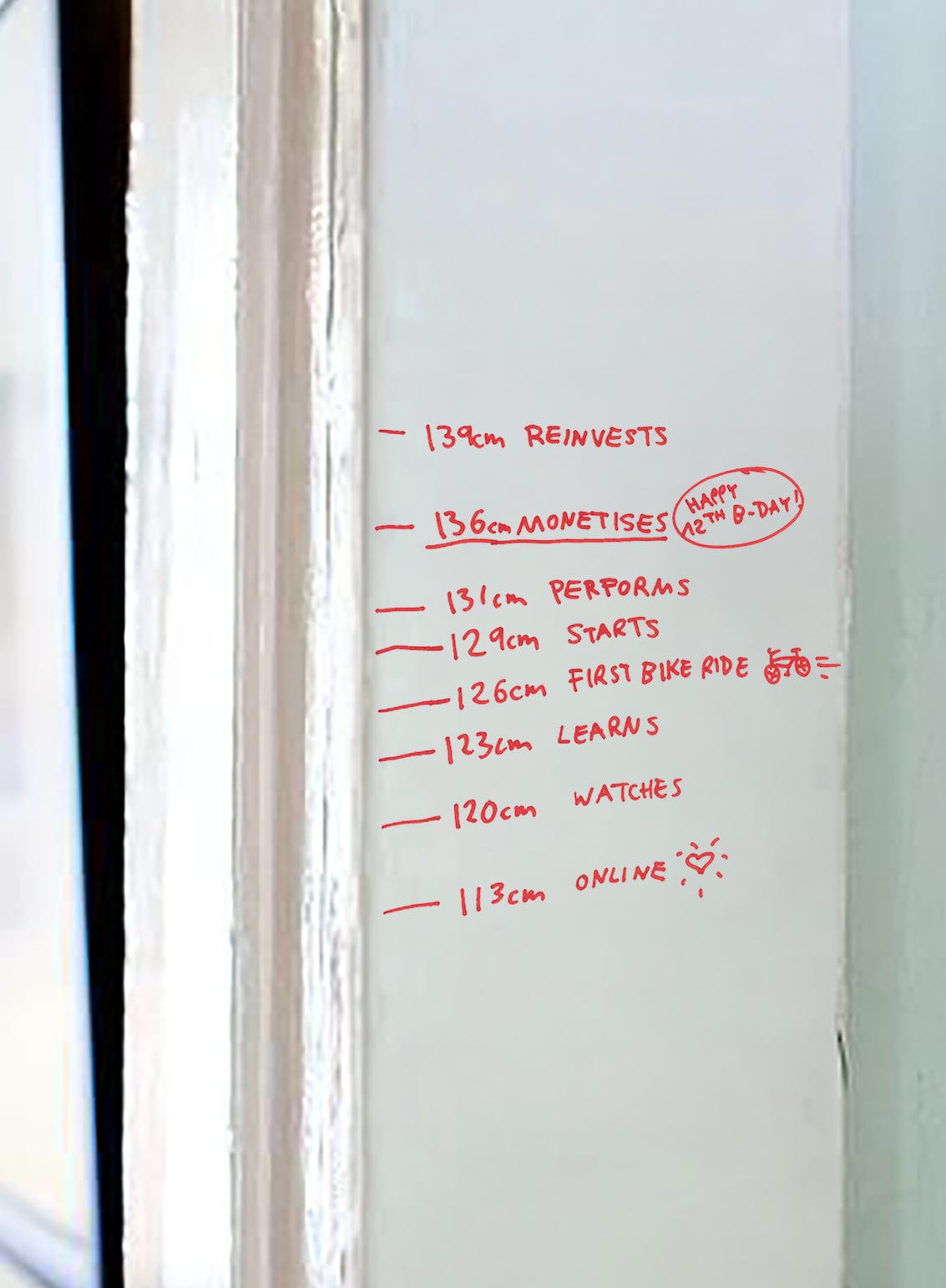
Young entrepreneurship, as a whole, isn’t new either. But the conditions and infrastructures around it that make it possible at scale are. The pandemic was the accelerant no one planned for. For an entire generation, it collapsed school, social life, entertainment, identity building, and creative expression into the same few apps. In the UK, 52% of children reported a significant increase in screentime during lockdown.

But the important shift was more structural. Over the last decade, the floor for starting something has collapsed. Roblox turned game-making into a creator economy. TikTok Shop fused discovery, entertainment, and checkout into a single motion. Depop transformed resale from a Sunday vintage market browse into an always-on hustle. Canva, CapCut, Figma—each one shaved another layer off the barrier to entry.
The numbers reflect it. In the US, 24% of late teens said they’re already acting as entrepreneurs. In the UK, 82% of late teens said they’re considering starting their own business. And then AI arrived and superchanged all of it. According to Pew Research, 38% of American teens are already using it to create and edit content. And boy do they make content.
Online Fluency = The Young Hustler’s 10,000 Hours
Here’s where the conventional wisdom about young people and screens falls apart. These young hustlers don’t have the years under their belts to call themselves experts, but the very idea of expertise is quietly being dismantelled around them anyway.. They aren’t seeking mastery in the traditional sense, because the traditional sense is losing its value in real time.
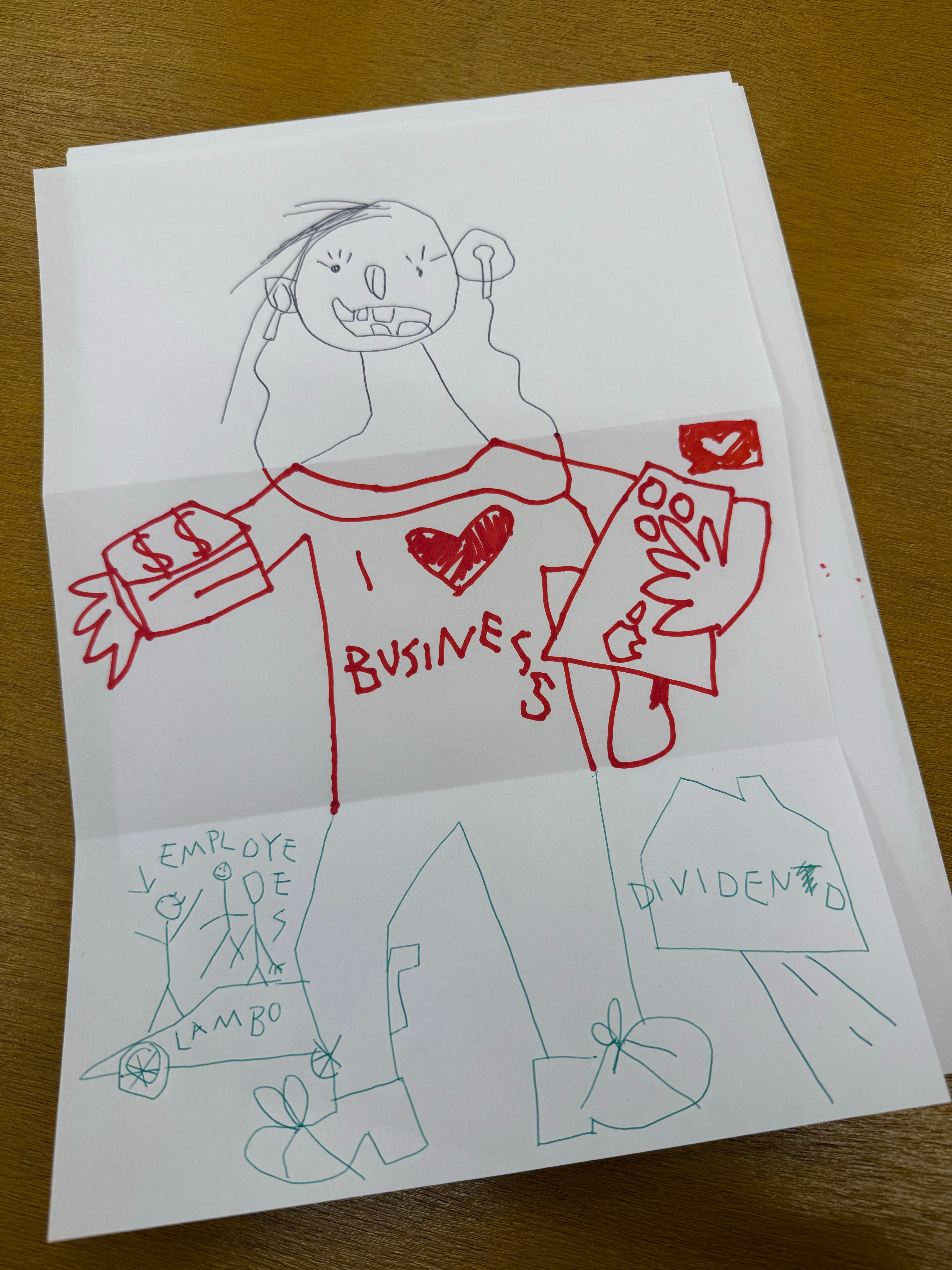
For previous generations, credibility was built through time: at the sewing machine, in the lab, behind the counter, in the studio, on the shop floor, or deep in the software suite. Accumulated hours were the currency of authority. Malcolm Gladwell’s 10,000 rule was a cultural contract. Put the time in. Wait your turn. The world will recognize you eventually.
That contract is now being voided. For this generation, the hours are still there but they’re screen hours.
And not passive ones, but active cultural absorption: watching formats, decoding tone, understanding parasocial frequencies, tracking in-jokes, learning what makes people stop, save, share, buy or remix. It’s in its own way a rigorous education, just not one that institutions have yet figured out how to credential. Salish Matter built a content empire (alongside her family) before she launched her own beauty brand last year. The content simply was an apprenticeship directly impacting profits.
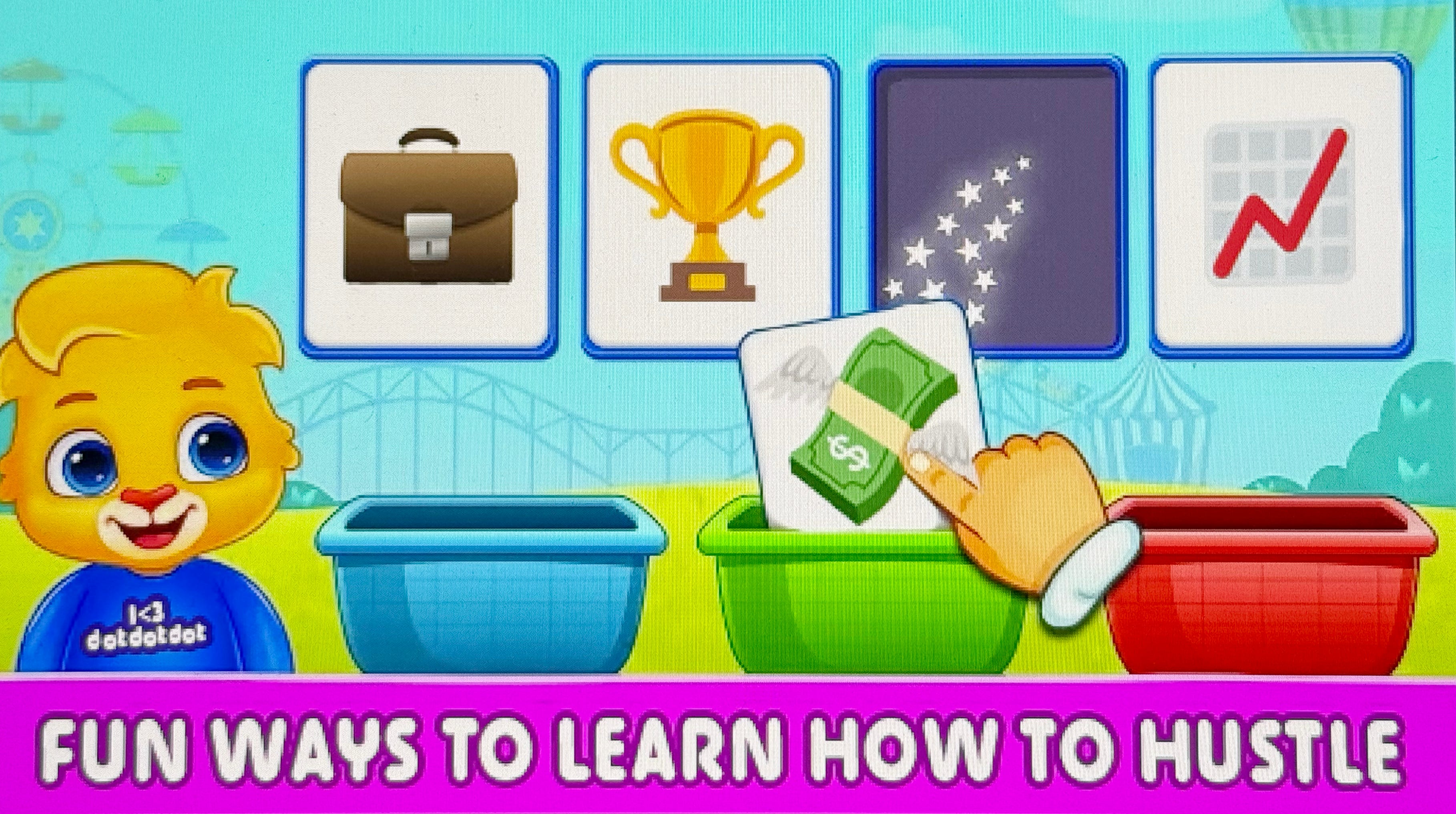
That’s the modern youth hustle in miniature: observe fast, build faster, and monetize the momentum. But why? What compels younger people to hustle with such relentless, almost insatiable, hunger? Call it passion, yes. But, in a more unsettling sense, call it protection.
All these young hustlers need to do is look around them. In the US, 89% of college graduates fear AI and automation will replace entry-level jobs. In the UK, 26% of young adults have stopped applying for a job altogether. The unemployment rate for young graduates in the US is already at its highest level since the start of the pandemic.
Education, meanwhile, is struggling to keep pace. Best practices are becoming perishable goods—outdated over quarters. Only 10% of UK graduates say a university degree prepares them for the future.
The degree, once the most reliable return on a young person’s time, is starting to look like a four-year delay in a race that won’t wait. So a cottage industry has grown up around the cracks: YouTubers and coaches charging up to $1,500 for “degree hacking” sessions, online colleges offering bachelor’s degrees completable in months, students road-testing credentials before AI renders them obsolete.
Young hustlers aren’t simply trying to get rich quickly. They’re trying to reduce their exposure to systems they no longer trust to protect them.
This reframes everything. When 57% of young Americans claim they want to be influencers (and 53% calling ita “reputable career”), the easy reaction is to eye-roll. The more honest reaction would be to recognize it as a coherent strategy. When institutions feel unstable, betting on your own personal brand starts to look less like narcissism and more like contingency planning.
The self-actualized, get-your-bag mindset of younger generations cannot be simply dismissed as good old materialism. The younger generation is doing the actuarial math and arriving at a logical conclusion: own your platform, own your audience, own your income stream. When eleven-year-old musician ZaZa steps out in Nike Dn8s on a paid partnership with the Swoosh, the comment section is impressed.
But resist the urge to flatten them into a category. These young hustlers are anything but your average cookie cutter influencers. They’re entertainers, hobbyists, artisans, commentators, builders, and niche obsessives. Their power comes from depth as much as visibility. Take Freddie Williams, a teenage fragrance aficionado giving informed scent recommendations to everyone from schoolmates to high-flying holidaymakers. What makes his content compelling is the seriousness of his interest, young age aside. Scroll through his comments and you find genuine conversations about longevity, skin chemistry, value for money, and how a scent behaves in different environments.
It’s easy to shake our fingers at young hustlers and mourn the loss of a “normal childhood.” The concern isn’t entirely baseless. There are real questions around pressure, exposure, labor laws, parental involvement, and the incentive structures baked into the platforms themselves. But if moral panic is the only register we can access, we’ll miss what’s actually worth paying attention to.
The Unjaded Generation
There’s a particular kind of industry wisdom passed down like scripture: find your voice, pay your dues, wait for the world to decide you’re ready. What the young hustler has figured out— perhaps because no one told them otherwise—is that the moment is a myth.
Personal brands are built through point of view, speed, and proximity. And it turns out that youth, long treated as a liability in creative industries, is one of the sharpest points of view available.
FKA Twigs, who collaborated with North West on “Childlike Things,” told Rolling Stone that what struck her was the absence of jadedness—an unwavering conviction unclouded by industry cynicism.
Nobody deploys it better than Taylen Biggs. At 13, she’s become a fixture across runway and red carpet coverage, known for fearless, disarming interviews with some of fashion’s biggest names. Her advantage is that she doesn’t mimic her older peers.
Biggs’ secret is about pulling these larger than life figures into her orbit. In an interview with Donatella Versace she asks: “When you were around my age, what did fashion represent to you?” It’s a simple question, but it reframes the interaction. Instead of asking a fashion icon to perform authority, she invites her to remember feeling. The result is a softer, more joyful, more revealing exchange than many adult interviewers could access. Biggs is carving out a clear lane in the media industry that only her age and approach could afford.
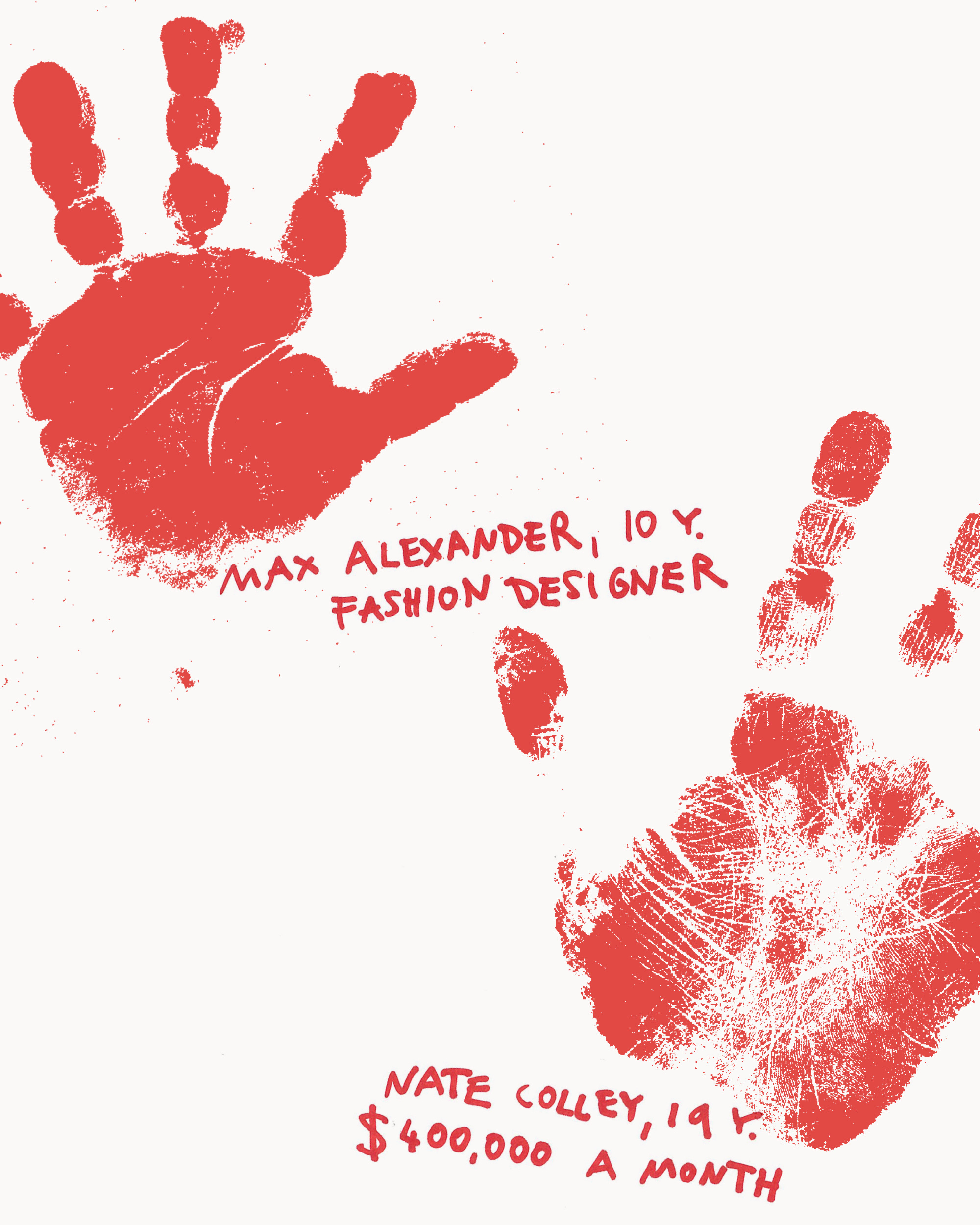
Max Alexander, the then year old we mentioned earlier who is also a Guinness World Record holder for the youngest person to design a runway show, puts it plainly: “There’s kind of no difference between me and older designers. Just because adults are older doesn’t mean they have to like fancy stuff, and as a kid I have to like other stuff.”
That line quietly detonates one of culture’s laziest assumptions: that taste has an age range. Creativity doesn’t always respect hierarchy. Sometimes the best ideas arrive before someone has been trained out of having them.
The Young Hustler is Not a Target Demographic
Here’s where brands need to tread carefully.
Studying the psychology of the young hustle cannot be about learning how to sell to children. Brands must learn from the conditions kids are building inside these ecosystems. Because what these young hustlers are modelling is a fundamentally different relationship between brand, audience, and authority. Legacy brands operate on a clean separation that made sense for a different era: we speak; you listen; we launch, you respond. Young hustlers don’t recognize that separation. Their audience is part of the operating system.
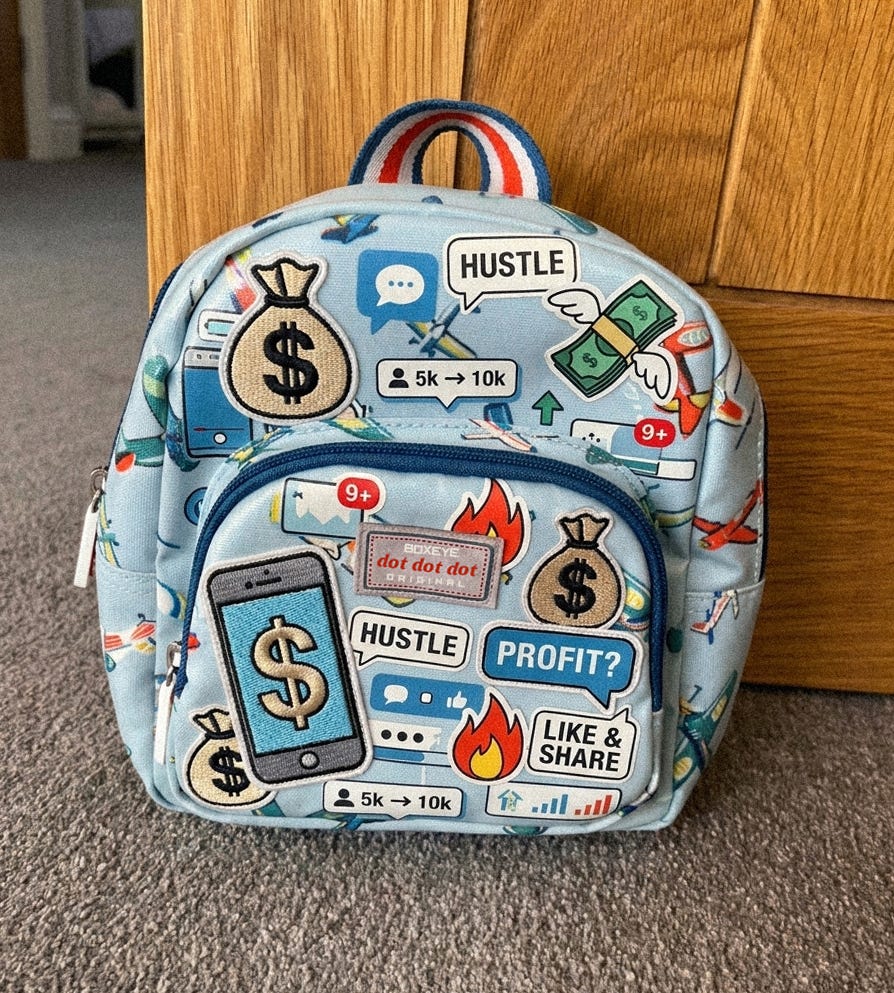
Followers correct them publicly. Comments become product feedback. Criticism becomes content. Actual communities teach them the rules in real time, and mistakes don’t disappear into post-campaign analysis decks. They happen live, in front of everyone, with receipts.
The real lesson here is in control. Or rather, the willingness to relinquish it. Young hustlers let audiences shape the journey, pressure-test the product, challenge the expertise, remix the output and participate in the making. Legacy brands love to call this community, when we all know it isn’t.
The young hustle shows a more uncomfortable model: community as co-author. They treat the market as a live feedback loop rather than a final exam.
None of this means brands should start mimicking young hustlers. Nobody needs a 47-year-old brand director captioning campaign posts with “chat, are we cooking?” The opportunity is recovery—of curiosity, of specificity, of the willingness to experiment before the category has given you permission, to form a point of view before the data has confirmed it’s safe.
The brands, institutions and individuals paying attention to how these kids are building (not what they’re building) will be the ones who realize that unjadedness is a competitive advantage.
The young hustler already knows better than anyone that waiting your turn might be the riskiest move of all.
 | A guest post by
|
This was a slapper! Great read. I have so many thoughts.
The facade of 'work a normal job and do the right thing and you'll be fine' feels totally lost on this generation. They're breaking the mould. Thats exciting.
What's scary is how normalised its become. Being a successful entrepreneur is really hard. They're faced with an endless stream of wealth porn screaming if you don't end up like North West then you suck.
You can't get a normal job because of AI. Even if you do, you can't afford a house. You're told to try and make millions on your own, but the chances are tiny.
Bleak economic conditions sparked entrepreneurialism. Social media gave it a platform and turned it into influencer content. The gap between reality and what's shared feels stark.